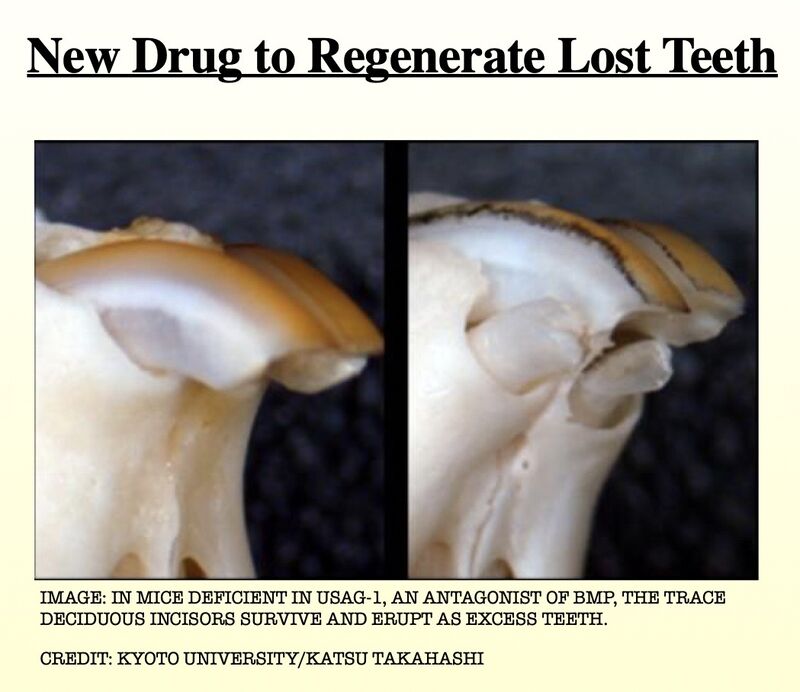
The magic of the tooth fairy might soon be a reality for adults requiring tooth replacement, thanks to revolutionary research by scientists from Kyoto University and the University of Fukui. Their recent study, published in Science Advances, demonstrated that an antibody targeting the Uterine Sensitization Associated Gene-1 (USAG-1) could stimulate tooth growth in mice with congenital tooth agenesis.
Congenital tooth agenesis is a condition affecting approximately 1% of the population. It often results in abnormal tooth development and insufficient teeth. Katsu Takahashi, the study’s lead author, stated that the molecular basis of tooth development—namely, the Bone Morphogenetic Protein (BMP) and Wnt signalling—was already understood.
However, drugs that directly target BMP and Wnt can have potential side effects on various organs and tissues due to their integral role in growth regulation. Identifying a need for a safer method, the researchers focused on USAG-1, a gene that suppresses BMP and Wnt specifically in tooth development.
Their investigations revealed that inhibiting USAG-1 promotes tooth growth. They tested several monoclonal antibodies, commonly used in cancer treatment and vaccine development, for their effects on USAG-1. Although some antibodies negatively affected overall growth, one antibody selectively interfered with the interaction between USAG-1 and BMP without influencing Wnt signalling.
Experiments showed that BMP signalling plays a crucial role in determining the number of teeth in mice. Astonishingly, administering the antibody just once was enough to generate an entire tooth. Encouragingly, ferrets—whose dental patterns resemble those of humans—also experienced the same benefits after treatment.
Building on this breakthrough, the researchers intend to further explore the effects of these antibodies on other animals, such as pigs and dogs. As of now, tooth regeneration in individuals with congenital tooth agenesis relies on artificial measures such as implants, so this discovery is a significant step toward a new therapeutic approach.
The study is the first to successfully demonstrate the effectiveness of monoclonal antibodies in tooth regeneration, providing hope for a clinical issue previously limited to artificial interventions. The researchers believe their findings indicate the potential of cell-free molecular therapy to effectively treat a wide range of congenital tooth agenesis cases, thus expanding the possibilities for tooth regeneration.
This ground-breaking research brings us a step closer to a future where tooth loss can be naturally reversed. It paves the way for enhanced dental healthcare and promises to improve the quality of life for millions of individuals across the globe.
Note: The post is taken from Dr Sanjana with her consent. Follow her for more such details LinkedIn
Connect me at LinkedIn
 Welcome! I’m amitkumar Shrivastava, Head of AI, Global Fujitsu Distinguished Engineer, and Fujitsu Fellow. This blog is dedicated to exploring the latest in technology, with a focus on artificial intelligence. Here, I share insights from my work, tech travels, and ongoing projects in the AI space. Join me as we dive into cutting-edge innovations and industry updates. Know about me more on : LinkedIn: https://www.linkedin.com/in/amitkumar-shrivastava/ and Company Public Profile (Distinguished Engineer): https://global.fujitsu/en-global/about/activities/global-fde/amitkumar-shrivastava
Leave a comment