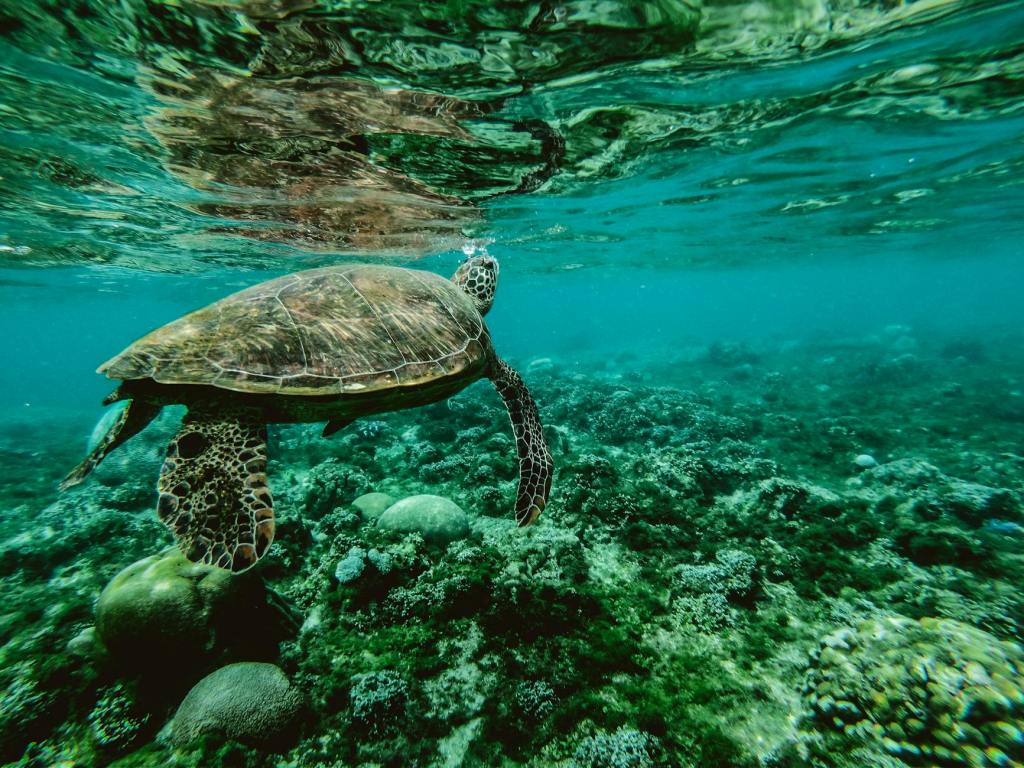
Fujitsu Limited has developed a technology that utilizes LiDAR and artificial intelligence (AI) to generate high-resolution 3D data of marine ecosystems and artificial structures beneath the sea. Announced from our Tokyo headquarters on March 26, 2024, this initiative marks a significant stride in our research and development efforts to create comprehensive ocean digital twins.
Our technology uses autonomous underwater vehicles (AUV) to capture detailed 3D representations of underwater organisms, coral reefs, and infrastructures such as wind turbines. This innovation not only aids in the study of marine ecosystems with unparalleled accuracy but also enables the simulation of environmental changes and the effectiveness of conservation efforts.
Originating from a technique developed for the “Judging Support System” in collaboration with the International Gymnastics Federation, our method facilitates scanning in challenging conditions, including rough currents and waves. Enhanced by Fujitsu’s AI for image clarification, it ensures precise identification and measurement of underwater targets, even in turbid waters.
A field trial conducted near Ishigaki Island, Okinawa, collaborating with the National Maritime Research Institute, has successfully mapped coral reefs with unprecedented precision. This endeavour is part of our broader vision to support marine conservation, contribute to carbon neutrality, and promote biodiversity by developing ocean digital twins.
Fujitsu aims to extend this technology to encompass seaweed beds, a significant absorber of blue carbon, by FY 2026. This will empower companies and local governments with data-driven insights for carbon storage estimation, conservation, and promoting biodiversity in marine ecosystems. This digital twin technology is creating a way for sustainable marine conservation and the fight against climate change.
Connect me at LinkedIn
 Welcome! I’m amitkumar Shrivastava, Head of AI, Global Fujitsu Distinguished Engineer, and Fujitsu Fellow. This blog is dedicated to exploring the latest in technology, with a focus on artificial intelligence. Here, I share insights from my work, tech travels, and ongoing projects in the AI space. Join me as we dive into cutting-edge innovations and industry updates. Know about me more on : LinkedIn: https://www.linkedin.com/in/amitkumar-shrivastava/ and Company Public Profile (Distinguished Engineer): https://global.fujitsu/en-global/about/activities/global-fde/amitkumar-shrivastava
Leave a comment