
Digital transformation, underpinned by increasing urbanization and disposable incomes, has not spared the traditionally old-world real estate industry. PropTech, or technology and digital innovations aimed explicitly at revolutionizing the property sector, is leading this transition in India.
Since its emergence in the 21st century, PropTech has evolved into a vibrant ecosystem of digital solutions and technologies to refine the Indian real estate sector. It’s moved from simply listing properties online to integrating sophisticated technologies. Developments like interactive visualization, analytics, AI, AR/VR, blockchain, and eco-friendly construction methods forecast an exciting industry future.
The influence of PropTech spans diverse real estate segments, including residential, commercial, sustainability, finance, sales, and construction. This potential has given rise to a wave of startups and accounts for over 6% of the total recognized startups in India, ranking fourth globally in total funding. It’s an attractive FDI avenue. Notable examples include NoBroker, India’s first PropTech unicorn, in 2021, followed by others such as Oyo, Infra.Market and Livspace.
The sector’s momentum has recently been further boosted by initiatives like DISRUPTECH 2.0 by CBRE and NASSCOM, aimed at nurturing emerging PropTech startups.
Despite the pandemic, the sector demonstrated remarkable resilience. After a temporary investment downturn in 2020, funding for startups like HomeLane bounced back, underlining the sector’s enduring strength and growth potential.
The post-pandemic recovery is particularly noticeable in the coworking and coliving spaces sector. These currently occupy 27% of Indian office real estate, up from 14% in Q1 2019. PropTech startups specializing in mortgages and finance are also attracting investments, indicating a significant shift in the industry.
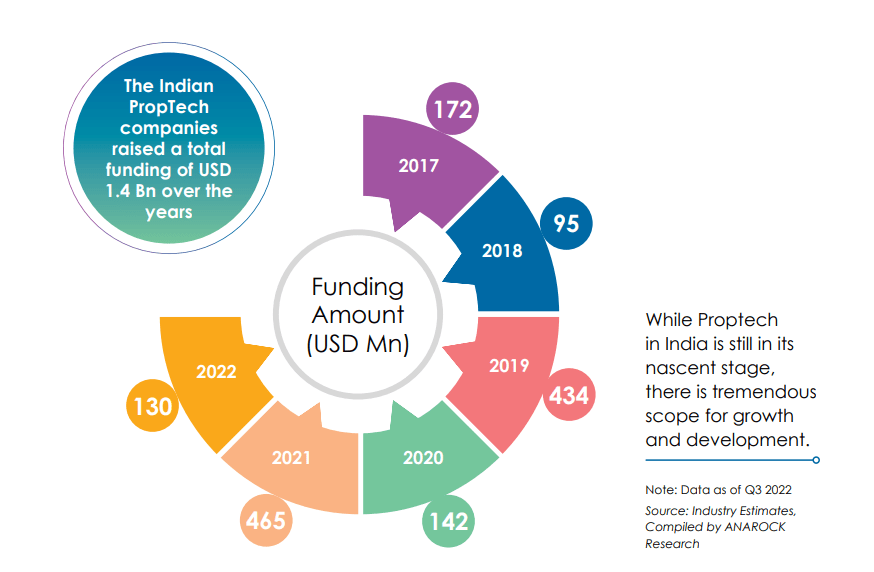
However, challenges for PropTech in India remain. Limited technology adoption in rural areas, infrastructural deficits, data privacy concerns, and the need for updated regulatory frameworks all present hurdles to the sector’s advancement.
Despite these challenges, the future of PropTech in India is promising, with its growth trajectory pointing towards streamlined, secure, and efficient real estate transactions. With numerous startups entering the field, supported by innovative technology and strong investor backing, the potential for a trillion-dollar Indian real estate industry is becoming a tangible reality.
The PropTech revolution in India is reshaping the real estate landscape and driving economic growth and is expected to contribute approximately 13% to India’s GDP by 2025. It reflects India’s entrepreneurial spirit & highlights the capacity of technology to foster economic and social development. Thus, despite its challenges, the future of PropTech in India looks decidedly bright.
Pic Credit – http://surl.li/hnstw
 Welcome! I’m amitkumar Shrivastava, Head of AI, Global Fujitsu Distinguished Engineer, and Fujitsu Fellow. This blog is dedicated to exploring the latest in technology, with a focus on artificial intelligence. Here, I share insights from my work, tech travels, and ongoing projects in the AI space. Join me as we dive into cutting-edge innovations and industry updates. Know about me more on : LinkedIn: https://www.linkedin.com/in/amitkumar-shrivastava/ and Company Public Profile (Distinguished Engineer): https://global.fujitsu/en-global/about/activities/global-fde/amitkumar-shrivastava
Leave a comment